

Solar Power
How to Explain Solar Energy to Kids (Ages 6–10) in Simple Terms
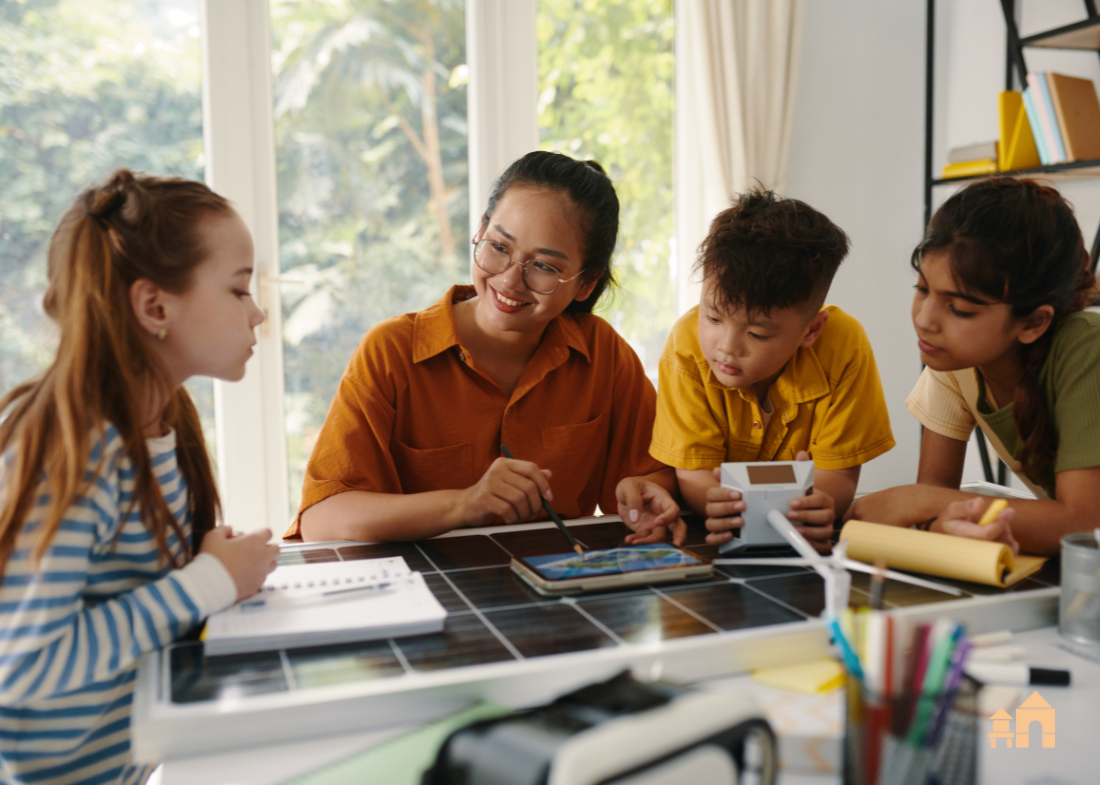
How to Explain Solar Energy to Kids (Ages 6–10) in a Way that Truly Makes Sense
Figuring out how to explain solar energy to kids is a challenge many teachers, parents, and people who care about spreading the word about renewable energy face when trying to introduce this stuff in a way that isn’t just plain confusing to young learners. Kids between the ages of 6 and 10 are naturally curious, but when it comes to ideas, they need them to be real and connected to stuff they can see, touch, and use every day. So where do you even start? Well, one simple way is to talk about the sun’s energy – how the sun just puts out energy into space every day that we can use in loads of different ways.
This guide will walk you through some super simple explanations, language that’s just right for their age and some really useful hands-on ideas that will help kids understand how sunlight gets turned into power, without overwhelming them with all sorts of complicated scientific details.
Start With What Kids Already Know About the Sun
If you’re wondering how to explain solar energy to kids, one of the best ways to start is by building on what they already know. We mean, kids see and feel the sun every day. They know it makes them warm, helps plants grow, and lights up the sky. The sun is the centre of our whole solar system and all the planets (including Earth) orbit around it, making it the main power source for everything in our solar system. This energy is made deep down inside the sun’s core, where the sun creates its power.
A simple explanation might sound something like this:
“The sun is like a massive power-giving lamp up in the sky. It sends down loads of energy to Earth every day.”
Don’t go using words like “radiation” or “electrons” at this age – clarity and simplicity is the way to go.
Use Simple Cause-and-Effect Language
Kids around 6-10 years old are brilliant at understanding cause and effect. When explaining solar energy, keep it linear and easy to follow:
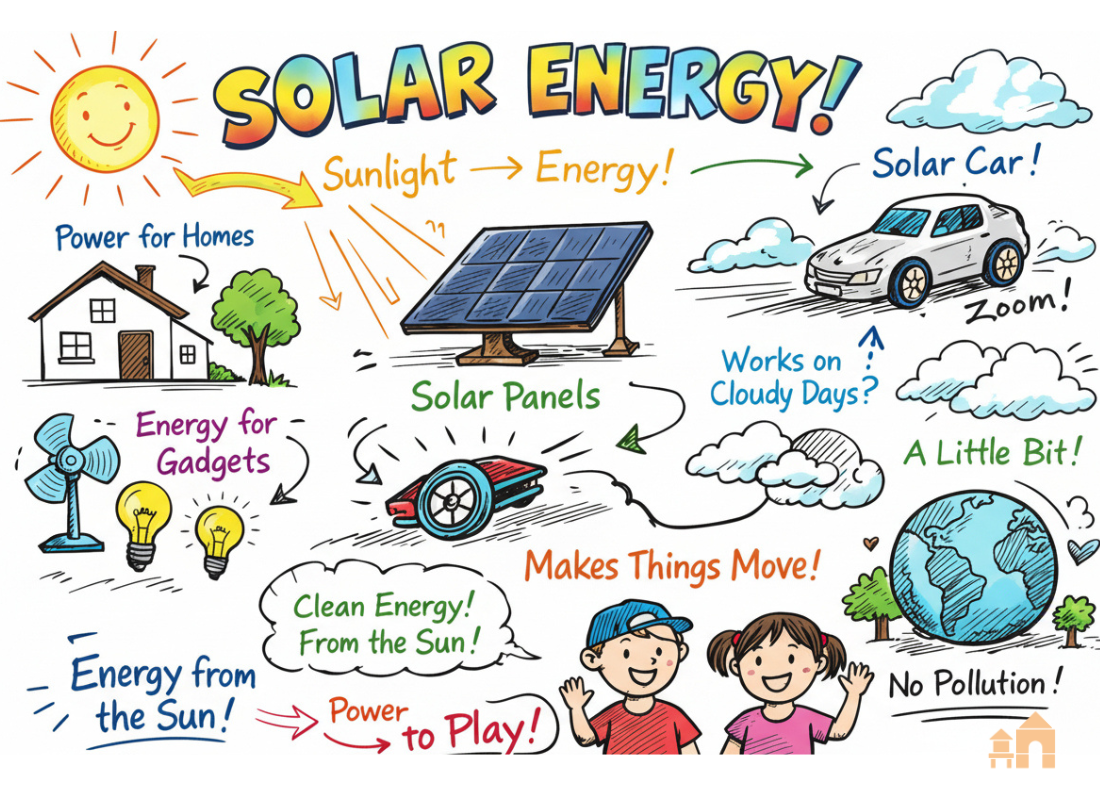
- The sun shines
- Solar panels catch the sunlight
- The sunlight gets turned into energy
- Solar panels then produce electricity
- That energy makes things move or work
This will help kids connect the dots and get a clear picture of how it all works. When thinking about how to explain solar energy to kids, don’t get too caught up in the hows and whys of it all – just focus on what happens next.
You can say something like:
“When sunlight hits a solar panel, it wakes up some tiny energy bits inside it. The solar panel produces electricity that can be used to power things like motors, fans, or anything with wheels that needs energy to move.”
Explain Solar Panels in Ways They Can Relate to
Analogies are an amazing teaching tool. Kids already have a handle on batteries, plugs, and switches – even if they don’t know exactly how they work.
Here are a few comparisons that work a treat:
- Solar panels are like big rechargeable batteries that fill up with sunlight\
- Solar batteries are like regular batteries but instead of using power from a plug, they store energy from the sun so we can use it later when the sun isn’t shining\
- Sunlight is the fuel that makes things go, just like how food gives us energy to move and run around\
- Solar-powered toys are like wind-up toys but instead of using a spring, they use the sun’s energy\
- Solar energy is like a magic well that never runs dry – there’s always loads and loads of sunlight coming every day
Compare and contrast ideas with what they already know, and use everyday examples to make those abstract ideas feel more real.
Keep it Simple and Repetitive
Repetition is key for helping kids learn. Using the same simple words over and over again is a lot more effective than throwing in loads of new and complicated terms.
Instead of saying:
- “Photovoltaic cells convert solar radiation into electricity”
Say:
- “Solar panels turn sunlight into energy”
Keep repeating simple phrases like:
- “Sunlight becomes energy”
- “Energy makes things move”
- “Solar power comes from the sun”
this will help kids connect the dots and get it stuck in their head that way.
Solar energy is an example of renewable energy – there’s loads of it, and it won’t run out. Other examples include wind power, which is another way of getting clean energy without using loads of resources.
How Solar Panels Work (Explained in a Way Kids Can Get Their Head Around)
Solar panels are like those magic windows that turn the suns energy into electricity we use every single day. Solar panels use photovoltaic technology – a pretty cool technology that lets sunlight get turned into electricity. Each solar panel – or photovoltaic panel – is made up of loads of tiny solar cells or photovoltaic cells. These cells are made out of a special material that loves basking in the suns rays. When the sun shines on those cells it gives them a boost of energy and knocks loose some electrons. As those loose electrons start to move around, they create an electric current – this is called the photovoltaic effect.
The electricity generated by the solar cells is called direct current electricity, or DC electricity. An inverter is a special device that changes this DC electricity into alternating current (AC electricity), which is the kind of electricity we use in our homes. The more solar cells a photovoltaic panel has the more electricity it can produce. That’s why you see big photovoltaic panels on rooftops or in fields making enough power for a whole house or even a school. It’s almost like having your very own mini power plant right on your roof, harnessing the suns energy to make clean, renewable electricity for everyone to use.
Solar tech includes all sorts of ways to use the suns energy – like photovoltaic panels and other systems.
Introducing How Solar Panels Get Put Up and Taken Care Of
Ever wondered how solar panels end up on rooftops or in big fields, and how they keep on working year after year? Just like how you look after your favourite toys or your bike, solar panels need a bit of TLC to keep turning the suns energy into electricity.
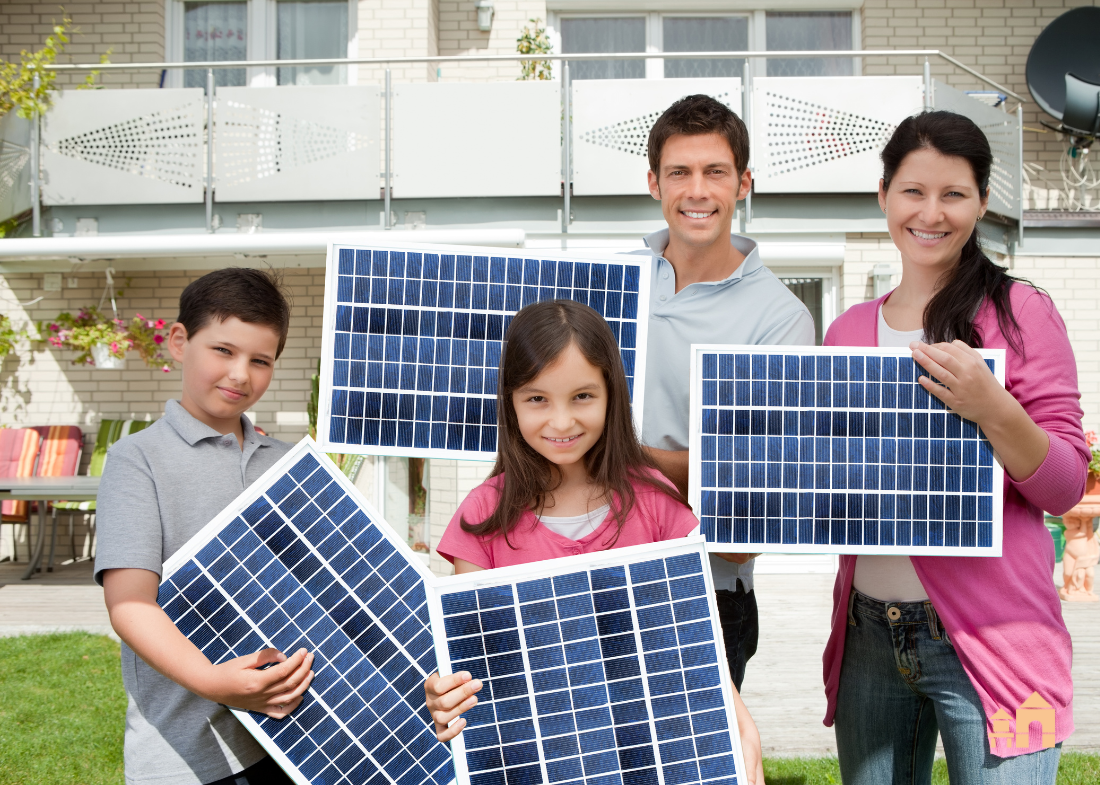
**Putting Up Solar Panels:**When someone decides to use solar power for the first time, they’ve got to find the perfect spot for their solar panels – usually somewhere that gets loads of direct sunlight, like a sunny roof or a nice open field. The panels get placed at just the right angle so they can soak up as much sunlight as possible. The people putting them up make sure they’re securely fastened so they don’t budge or fall over, even on windy or rainy days. This is super important because solar panels need to be safe and steady to work properly.
**Taking Care of Solar Panels:**Once solar panels are installed, they need to be kept spick and span and checked over regularly. Sometimes, dust, leaves, or even bird droppings can cover the panels and block the sunlight. Just like how you clean your windows to let in more light, solar panels need a good cleaning so they can soak up the suns energy again. People also check the panels for any cracks or damage, especially after a storm or bad weather. If anything isnt working right, it can get fixed so the panels keep on making electricity.
**How Long Do Solar Panels Last?**With a bit of care, solar panels can last for 25 years or even longer! That means they can keep on producing clean, renewable energy for a long time, helping families and schools save money on electricity bills and use less fossil fuels.
**Big Solar Power Plants:**Sometimes, solar panels get put together in huge groups called solar power plants. These solar power plants can generate enough electricity to power thousands of homes! The people working at these plants use special tools to keep an eye on all the panels and make sure everything is running smoothly.
**Why Is This Important?**Taking care of solar panels makes sure they work their best, so we can get the most energy out of the sun. Solar power is a renewable resource, which means we wont run out of it as long as the sun shines. Plus, using solar energy doesn’t create greenhouse gas emissions or yucky stuff, so it helps keep our air clean and fights climate change.
Show, Don’t Just Tell: Why Hands-On Learning Matters
If you really want kids to understand solar energy, they need to see it in action. This is where hands-on activities really come into their own – they’re not just a nice extra, they’re actually the best way to get kids to really get what’s going on.
Visiting a local solar installation – like a rooftop or a community solar project – can give kids a real-life look at how solar panels work.
When kids watch a small solar-powered thing start moving under sunlight, it just clicks into place. No long explanation needed. They can see the energy working. For example, solar panels can power things like toys or small gadgets, showing how sunlight is converted into electricity that makes things happen or work.
For educators thinking about how to explain solar energy to kids, hands-on activities are a no-brainer:
- They get kids’ attention\
- They make kids want to ask questions\
- They make abstract ideas feel real concrete\
- They create memories that last
Even simple experiments – like putting a solar-powered thing in the shade and then moving it into sunlight – can spark some really interesting discussion.
Encourage Questions (Even the Unexpected Ones)
Kids often ask questions that you dont expect:
- “What happens on cloudy days?”\
- “Does the sun ever run out of energy?”\
- “Can we use solar power at night?”
These questions are not a hassle, they’re an opportunity.
Simple answers work just fine* “Solar panels get their best work done in sunlight, but even on cloudy days they can still scrape up some energy.”
- “The sun is a real giant, with loads of energy to go around for a very long time.”
- “At night, we’ve got electricity from the solar panels stored up in batteries, or we can just use power from the grid.”
When teaching how to break down the basics of solar energy to kids, let’s go easy on the explanations – after all, sometimes the simplest answers are the best.
Make Learning Fun – Its the Best Way To Learn
Kids love games, and that’s what makes learning about solar energy such a breeze. When you turn lessons into fun activities or challenges, they’re way more likely to pick it up without even realising they’re learning.
Some ideas to get you started:
- Racin’ solar-powered toys in the sun (remind the little ones that these toys do best when the sun’s usual overhead, not when there’s some cloud cover or a big tree in the way)
- Getting the kids to predict which direction will get the most sunlight
- Doing an experiment to see that solar-powered stuff needs the full sun to do its thing
- Organisin’ a group challenge where the kids have to work together to figure things out
Learning by playin’ keeps the kids engaged while quietly hammering home the science bit.
Solar Energy in Everyday Life – Some Surprisingly Cool Uses
Don’t get it twisted – solar energy is not just about powerin’ up your home. There’s loads of other cool stuff it can do too! For example, some folks use special solar-powered cookers to knock up a meal outside using just the suns rays. These cookers use mirrors to concentrate sunlight onto a single point, buildin’ up enough heat to cook some grub. No fuel, no electricity required – just the power of the sun.
Solar energy can also be used to pump water for farmin’ or gardenin’, with the help of solar-powered water pumps. That means farmers don’t need to use fossil fuels or extra electricity to get the job done. There’s even solar-powered phone chargers that let you top up your battery using nothin’ but sunlight – great for when you’re out and about.
It turns out some cars, bikes, and boats can run on solar power too – its amazin’ how creative people can get with solar energy!
Solar thermal power systems use mirrors and receivers to collect the suns heat and create power for big buildings or towns. Some of these systems can even store up heat for when the sun’s not shining, so they can still generate electricity even when the skies are grey.
Sunlight heats up the Earths surface – that’s just another way solar energy is gettin’ used. By puttin’ all these different uses together, we can help reduce pollution, use less fossil fuel, and fight climate change. Solar energy is a clean, renewable source of power that makes our lives easier and our planet healthier.
So Why Does Solar Energy Matter (Explained in a Way Kids Will Get)?
Once the little ones have got the basics of how solar energy works down pat, you can start explainin’ why it matters.
Try to avoid big topics like climate change – they’re a bit heavy for young minds. Instead focus on some more down-to-earth ideas:
- Solar energy keeps the air clean
- It doesn’t make smoke or pollution – none of that nasty stuff
- It doesn’t create greenhouse gases – things like carbon dioxide that trap heat in the air and make the Earth get warmer
- It comes from nature – which is pretty cool
- It’s pretty much endless – so we don’t have to worry about runnin’ out
If solar panels aren’t doin’ a good job, we can still get power from the national grid – that’s the big network that brings electricity to everyone’s homes.
A simple explanation could be: “Solar energy helps take care of our planet, while also givin’ us power to use every day.” This helps build up some basic awareness without gettin’ too complicated or frightenin’ for the kids.
Adapting Your Explanation For Different Age Levels
Even within the 6-10 age range, kids learn in different ways.
- 6-7 years old: Focus on visual aids, movin’ around and simple cause-and-effect
- 8-9 years old: Introduce simple problem-solvin’ and some basic experimentation
- 10 years old: Get the kids to make some predictions, observations and simple explanations in their own words. Suggest they compare solar energy to other forms of energy like wind or water to help ’em understand the differences and benefits of each.
When thinkin’ about how to explain solar energy to kids, be prepared to be flexible – the same activity can be done with a bit of language adjustment dependin’ on age and attentin’ span.
Make Solar Energy a Startin’ Point, Not a One-Off Lesson
Solar energy doesn’t have to be a single lesson – it can be the start of somethin’ bigger. It can lead on to:
- Energy and motion
- Engineering basics
- Sustainability
- Teamwork and collaboration
- Problem-solvin’ skills
- Learnin’ more about different solar energy technologies and their uses
- Learnin’ more about photovoltaic systems and how they’re used in different places
Kids who start with solar energy often go on to become super curious about how the world works – that’s what STEM education is all about.
Final Thoughts
Learning about solar energy to kids doesn’t need to be a brain-twister – you know, some really fancy science that only a handful of people can grasp or a bunch of complicated equipment that kids just won’t be interested in. Nope, all you need is to be able to explain things in plain English , come up with some examples that kids can actually relate to, and then throw in a way for them to get hands-on & see solar energy at work – and kids love that stuff.
By focusing on the sun, the way stuff moves around, and plain old fun , you can make this whole renewable energy thing actually sound pretty cool & not at all overwhelming but instead simply a really interesting topic. And as soon as the kids get wind of the fact that the sun can actually power some of the cool things they like messing around with , science starts to become real and that’s when the real learning can begin. The sun has been burning & producing energy for billions of years & now we can figure out ways to harness that energy in a way that’s actually pretty fun and useful.